

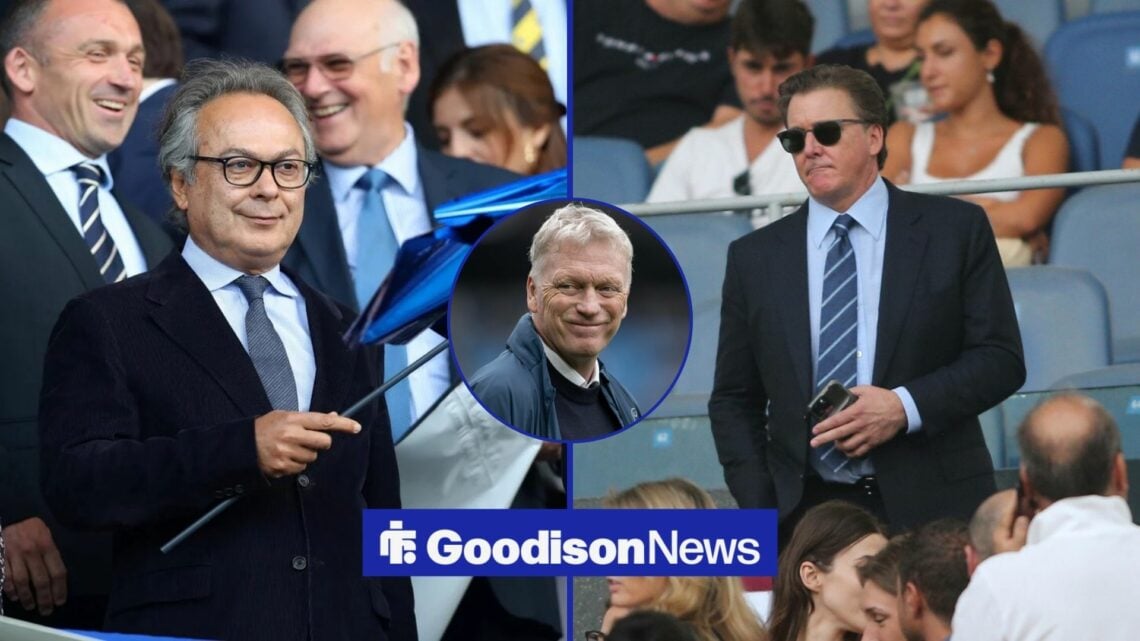
One year on since TFG’s Everton takeover completion – What’s better and what’s worse

Everton have completed their first year under the ownership of The Friedkin Group, who took over a club engulfed in turmoil last season.
That will already feel like a lifetime ago for most Toffees fans but the Americans, headed up by Dan Friedkin, are now presiding over a very different outfit.
Farhad Moshiri was once himself heralded as the man with the money and the ambition to drive Everton to the next level, but the later years of his reign were characterised by financial chaos, relegation fears, doubts over the completion of the new stadium, and an unending takeover circus.
Here, Goodison News looks at the situation 12 months on and how it has changed for the better, or worse, after TFG completed their takeover at Everton.

Everton turmoil under Farhad Moshiri brought to an end
Owner
Now that TFG are in charge it is tempting to simply say everything is better and stop there, especially when virtually anyone but Moshiri would have been an improvement buy the end of his time on Merseyside.
Anyone that is except the firm that he seemed closest to actually selling the Toffees to before Friedkin bought the club, at the second attempt.
For what felt like forever, but was closer to two years, Everton were stuck in a loop where prospective buyers came forward and began talks with Moshiri, only for a deal to fall apart in ever-more agonising fashion, as, among others, a consortium headed up by Peter Kenyon came at went, and MSP Sports Capital only made a minority investment, before the ill-fated arrival of Josh Wander and 777 Partners.

The Miami-based firm struck a deal in September 2023 to take the club off Moshiri’s hands, before taking the best part of a year failing to follow through with it, as financial and legal troubles mounted for them behind the scenes.
Although Moshiri granted extended deadlines for them to stump up the required cash while assuring fans they were the best option, they still couldn’t do so and 777’s deal to buy Everton fell apart on 1 June last year.
Moshiri soon agreed a deal with TFG that looked like the answer to fans’ prayers in comparison until they too pulled out, seemingly having got cold feet over the complicated financial picture they’d have to solve.
John Textor then embarked on a very public attempt to buy Everton, despite it being impossible for him to do so while he was still part-owner of Crystal Palace, before the Friedkins swooped back in and finally ended the nightmare saga.

It is rare that any club owner retains the widespread backing of the fanbase forever so there will surely come a point where frustrations will eventually grow with TFG as well, just as they have for Roma supporters.
But for now, simply by being capable of completing a takeover deal, possessing the finances to run the day-to-day, and not being subject to fraud allegations, as 777 were, or to government sanctions, as former Moshiri backer Alisher Usmanov was, the current owners are a roaring success.
Finances
Having finally woken up from the fever dream of the previous few years it’s almost easy to forget now that only last season there were genuine fears for the club’s future with debts mounting, Everton taking loans left, right, and centre, the team itself weakening with every passing transfer window, and huge losses posted each year.
The Premier League caused a storm of controversy by kicking the club while they were down and imposing a pair of points deductions on Everton for PSR breaches in the same season during the 2023/24 campaign, which Sean Dyche and his side did an incredible job to overcome and stay up with room to spare.
- Everton deducted 10 points for PSR breach in November 2023
- Deduction reduced to six on appeal in February 2024
- Everton deducted two more points for second PSR breach in April 2024
- Already safe from relegation the club opt against appeal
The tangle of millions owed to the likes of Rights and Media Funding, 777 Partners, MSP Sports Capital and Andy Bell and George Downing in order to keep the club operating appeared to have scuppered the TFG deal the first go around, but once the Roma bosses returned to the table and began ticking off those requirements the picture seems far more straight forward now.
Spending rules have meant the new owners couldn’t immediately splash out but Everton are finally on an upward trajectory now instead of circling the abyss.
Hill Dickinson Stadium finally Everton’s new home
Stadium
The Bramley Moore dock stadium development loomed large over the entire mess, but was long seen as the shining beacon of hope – if it could actually be completed and Everton could stay in the Premier League long enough to benefit from it.
It was seen as the jewel in the crown for prospective buyers, not least 777, but equally had helped exhaust Moshiri’s appetite to bankroll the club as the cost of the project grew and grew, while interest payments related to the build contributed to the PSR fight with the Premier League and the eight deducted points.

The Friedkins also secured the development’s completion when they took over and Everton finally moved into the Hill Dickinson Stadium this term as a top flight outfit. The ground has so far proven a fitting venue for the new era under the Americans, the the team unbeaten at their new home outside of a bizarrely-flimsy performance in Everton’s 4-1 loss to Newcastle last month.
Some fans will justifiably feel the situation is actually worse now, having left the history and aesthetic of Goodison Park behind, but in the modern game’s financial arms race it was unavoidable and just by having made it through in one piece it is a huge gain on a year ago to be playing at the 52,769-capacity ground.
Manager
It may ultimately have been the impossible job in the context of all the uncertainty and restricted resources that characterised the latter years of Moshiri but few fans would argue Everton aren’t better off managerially than 12 months ago.
Rafa Benitez was a doomed decision from the start given his Liverpool history and Frank Lampard was too inexperienced at the top level for such a gruelling job, even if the explosion of emotion after the 3-2 victory over Crystal Palace to keep Everton up under the Chelsea legend will live long in the memory.
Dyche was surely the pick of the post-Carlo Ancelotti appointments and his achievements in overcoming the points deductions can never be overlooked, all while constantly having to field questions on behalf of the ownership about a takeover saga that was chaotic at best.
The ex-Burnley man did his job but clearly seemed worn out by the time Dyche claimed he’d gone as far as he could with Everton last January, just weeks after TFG took over, amid growing discontent over his line-ups and playing style.
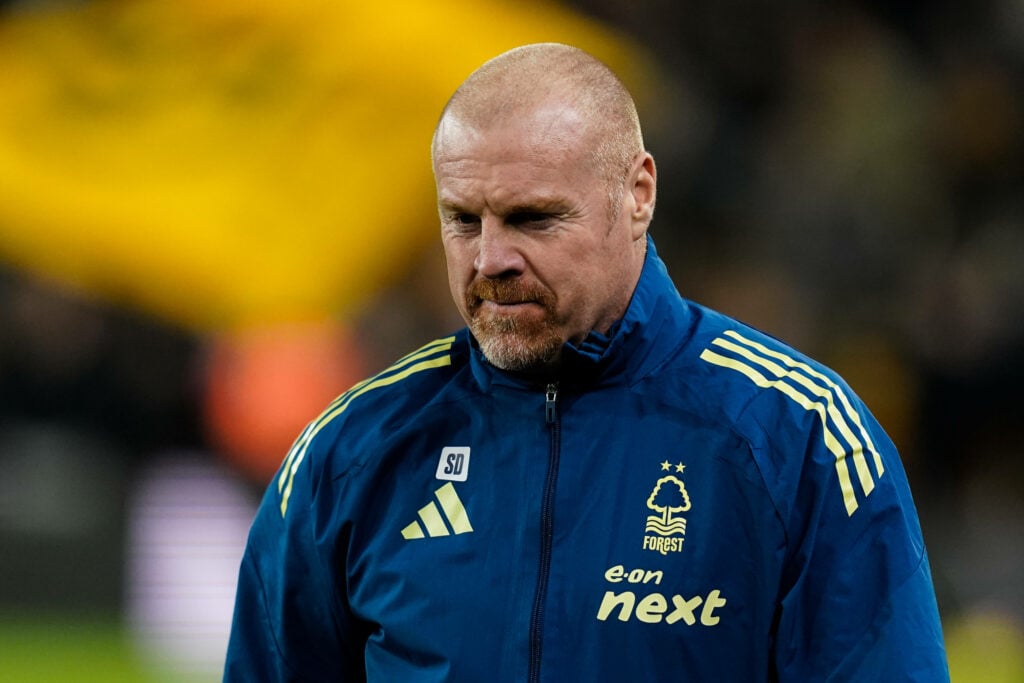
David Moyes was arguably in a similar position when he left West Ham the previous summer and it has proven something of a masterstroke from the new owners to bring back the Scot and recapture some of the early-2000s positivity that drove much of his previous reign.
Admittedly helped by the lack of doom and gloom around him, as well as an increasingly-positive impact in the transfer market, Moyes has looked revitalised back on Merseyside and once more has Everton pushing for European football – a far cry from the relegation battles that had become the norm.
Jack Grealish deal headlines new era in the transfer market
Squad/Transfers
Revamping a squad that had gradually been gutted under the cost-cutting measures of the previous regime will be a slow process but early signs have been positive.
It is difficult to imagine a name like Jack Grealish opting to relaunch his career, even on loan, with the pre-TFG Everton, not least after seeing the likes of Dele Alli and Donny van de Beek gradually disappear at Goodison.
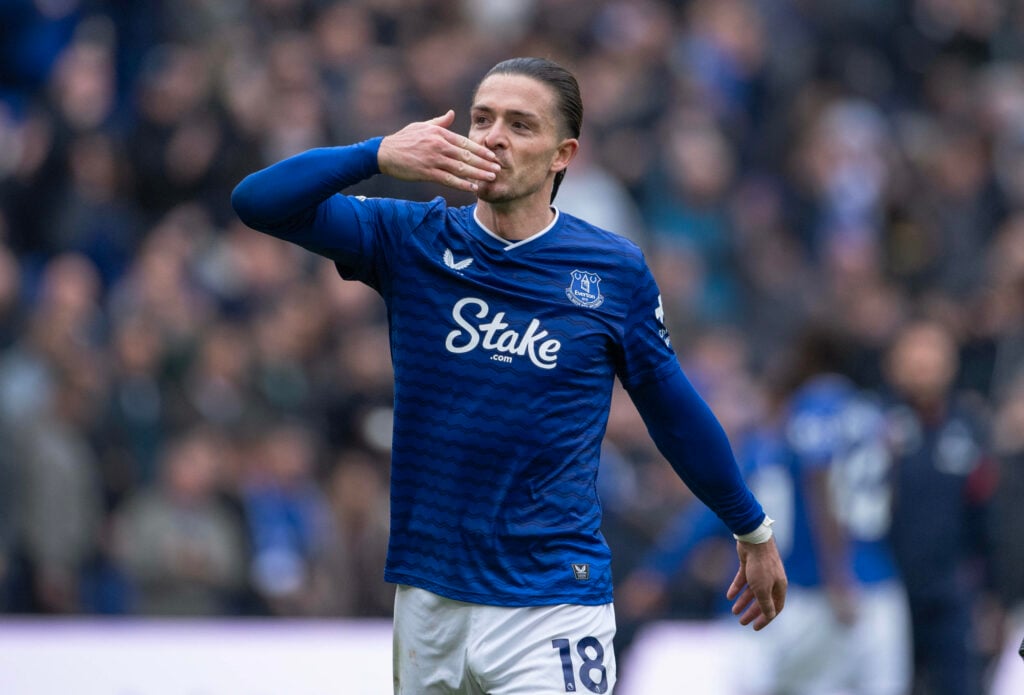
Actual incomings are arguably on a par, since key men such as Iliman Ndiaye, James Tarkowski and James Garner may have come in late in the Moshiri era but the additions of figures like Grealish and Kiernan Dewsbury-Hall feel much more like building blocks than emergency opportunities snatched up and likely to be punished under PSR, although Tyler Dibling seems to have vanished into the ether.
The fact that Jarrad Branthwaite remains, albeit long-term injured, might be the clearest sign of improvement after years of seeing some of the best players sacrificed for big money and cheaper alternatives fill the gap.
The club were virtually powerless to prevent the likes of Lucas Digne, Richarlison, Amadou Onana and Anthony Gordon moving on, whereas star centre-back Branthwaite remains for now, and his future may be the measuring stick for where this club finds itself in the food chain moving forward.
However, it has not been all plain sailing in the market and the crucial striker position has arguably got worse since the takeover, when it was far from a powerhouse prior.
Beto, brought in under the previous regime, and Friedkin signing Thierno Barry have contributed a grand total of two goals between them so far this term, while Dominic Calvert-Lewin was allowed to walk when his contract expired and is currently in red hot form at Leeds United where he looks to have saved Daniel Farke’s job.
Hindsight is of course a wonderful thing and Barry may still come good, after finally breaking his duck against Dyche’s Nottingham Forest this a fortnight ago, while Calvert-Lewin’s combined fitness and scoring record in recent years made it appear valid to let him go.
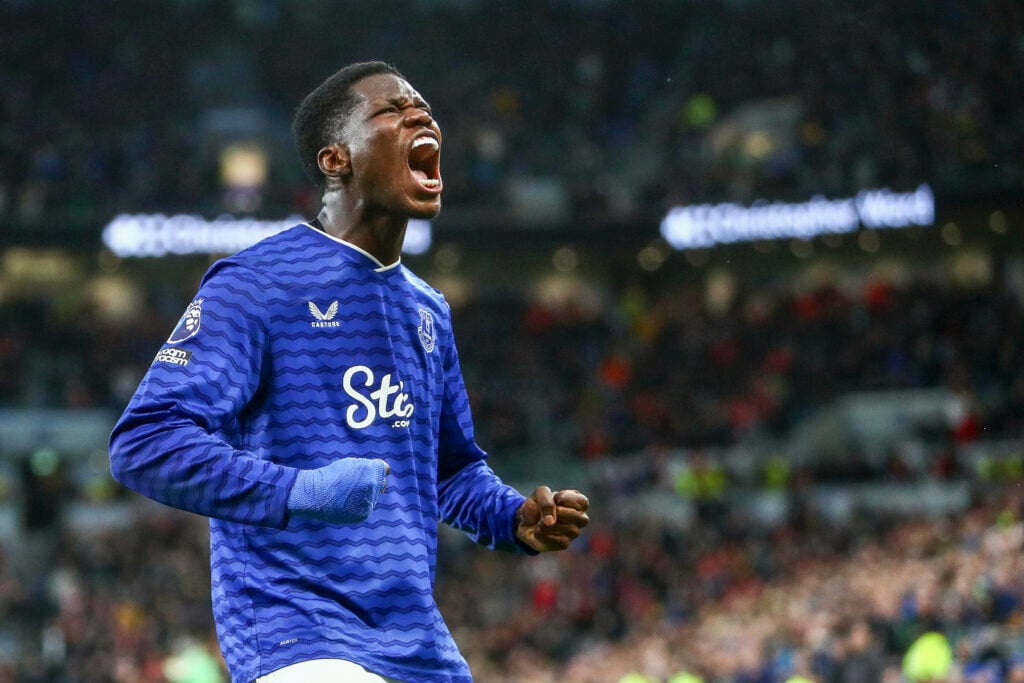
Even he would likely still be an Everton player were it not for the madness Moshiri led the Toffees through, as the Calvert-Lewin had a new Everton offer on the table a year ago that he didn’t sign due to the extensive uncertainty of the takeover.
The club again have a host of first-team players on expiring deals this term as well, with Michael Keane, Idrissa Gueye, Vitalii Mykolenko and Seamus Coleman due to leave, so there is plenty of work to be done to return or replace them.
TFG deliver vast improvements but Everton still work in progress
It’s hard to overstate the transformation in atmosphere around a club which felt like it was on its last legs for so long before the change in ownership.
Even when there wasn’t concrete bad news arriving, of which there was plenty, the day-in-day-out feel that something else was just around the corner was slowly draining the life out of a fanbase that continually thought they’d hit rock bottom, only to learn that there was worse to come yet.

Everton under Moyes aren’t exactly a free-flowing festival of attacking football every week, and the congested nature of the Premier League table this term means they are potentially just a couple of bad results from finding themselves scrapping near the relegation zone.
The squad is still thin, especially at full-back and central midfield while the aforementioned lack of impact at striker must be fixed, but one year on surely no Toffees would choose the situation they left behind under Moshiri to the one they have now, and some misfiring strikers are a fly in the ointment compared to the entire club potentially folding.
That won’t last forever though so TFG can’t dine out on simply not being Moshiri for long but have to ensure they continue to differentiate themselves from him and his hierarchy by making the right decisions and the right times to move this club forward.
Enjoyed this article? Stay connected with all the latest Everton news, updates, and behind-the-scenes content by following us on our new Instagram account – @goodisonnews